
The Cabinet has cleared a Bill to set up a government-owned development finance institution (DFI) with initial paid-up capital of Rs 20,000 crore so that it can leverage around Rs 3 trillion from the markets in a few years to provide long-term funds to infrastructure projects as well as for development needs of the country. To put it in perspective, Rs 3 trillion constitutes slightly less than 3 per cent of the Rs 111 trillion to be spent on over 7,000 projects in the National Infrastructure Pipeline from 2019-20 to 2024-25. Besides, the government will give Rs 5,000 crore as grant to the institution, Finance Minister Nirmala Sitharaman on Tuesday told the media after the Cabinet meeting.

PEs and VCs are taking a closer look at their bouquet of investments. Leading voices in the sector are categorical that cash-burn rates -- that's blowing up equity to acquire market share -- as a business model can't continue to be the polestar.

Insurance firms want more clarity before increasing foreign partner's stake.

Days after JP Morgan announced the inclusion of government bonds in its emerging market (EM) bond index, a host of banks and other financial institutions (FIs) are set to tap the debt market. They plan to raise Rs 18,000 crore by issuing non-convertible debentures (NCDs) and bonds. National Bank for Agriculture and Rural Development (Nabard) plans to raise up to Rs 3,000 crore via five-year social impact bonds on Tuesday, the first of its kind in India.

'Why should we disclose classified information to satisfy those who doubt our Hydrogen Bomb capability?'

For the initial public offering (IPO) of the Life Insurance Corporation of India (LIC), the Centre has shortlisted 50-60 anchor investors, which include BlackRock, Sands Capital, Fidelity Investments, Standard Life, and JP Morgan, and will soon finalise its anchor book. The feedback from anchor investors has led to price discovery in LIC shares, valuing India's largest insurer at around Rs 7 trillion, said an official aware of the development. The "attractive valuation" is seen widening the investor base by providing an opportunity to more of them to participate in the IPO, the official added.

Congress insists on sending legislation to select committee, says will support it in winter session.

India has received the fourth set of Swiss bank account details of its nationals and organisations as part of an annual automatic information exchange under which Switzerland has shared particulars of nearly 34 lakh financial accounts with 101 countries.


'These companies hired in high numbers last year and are balancing that out this year by recruiting fewer freshers.'

The 78-year-old Naveen is on the cusp of creating history. He must win the forthcoming Assembly polls to become India's longest-serving chief minister, a record held by Sikkim's Pawan Kumar Chamling.

The earnings of India Inc hit a record high in the 2022-23 (FY23) January-March quarter (fourth quarter, or Q4), compared with their poor showing in the previous two quarters of the financial year. The rise in earnings, however, is exclusively led by banking, financial services, and insurance (BFSI) companies. A better-than-expected showing by banks and non-bank lenders in Q4FY23 more than compensated for the earnings contraction in the non-BFSI space.

The 30-share Sensex ended 271 points higher to end at 28,930 and the 50-share Nifty climbed 76 points to close at 8,776.

'Indians are basically liked because they are educated, they are intelligent.'

Despite markets turning volatile, share sale activity at India Inc has surged to its highest level in five months. So far in March, promoters, strategic investors and other large shareholders have been able to offload shares worth more than Rs 33,000 crore-the most since November-defying uncertain market conditions. Both the Sensex and the Nifty are on course to post their fourth straight monthly loss amid headwinds, such as interest rate tightening by the US Federal Reserve and the global banking crisis.

Star Health and Allied Insurance's Rs 7,250-crore initial public offering (IPO), the third largest this year and eighth largest ever, just about managed to make it despite a poor response from investors, garnering just 79 per cent subscription, forcing the investment bankers to prune offer for sale (OFS) component. This is the second large offering after digital payments major Paytm this year to receive a lukewarm response from investors, a sign that despite the IPO frenzy investors are discerning when it comes to pricing. As Star Health didn't meet the profitability criteria, its IPO required a mandatory 75 per cent subscription from qualified institutional buyers (QIB).
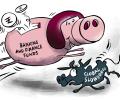
Even as banks and finance companies are reporting record-high earnings, their weighting in the benchmark National Stock Exchange Nifty50 Index has seen a downward trajectory. Investors expect a stronger performance from other sectors in the new year. Currently, banking, financial services and insurance (BFSI) companies collectively hold a weighting of 34.5 per cent, down from 36.7 per cent at the end of December 2022 and a record high of 40.6 per cent at the end of December 2019. This represents the sector's lowest weighting in the index since December 2021 when it stood at 33.7 per cent.

More and more women are making their presence felt in jobs related to sciences, technology, and engineering across organisations.

Stocks of small- and mid-cap companies continued to gain ground in July, notwithstanding analysts sounding caution on these two market segments given the sharp run thus far in calendar year 2023 (CY23). Sanjeev Prasad, co-head of Kotak Institutional Equities, in a note co-authored with Anindya Bhowmik and Sunita Baldawa in June-end, had cautioned against the sharp run in small- and mid-caps. "We do not see any particular reason for the excitement in small- and mid-cap stocks.

With the new owner shelling out Rs 18,000 crore for the buyout of 'Maharaja' this would be the highest ever amount garnered through privatisation or even the cumulative sum garnered through strategic sale in 1999-00 to 2003-04. The government had garnered roughly over Rs 5,000 crore during that five-year period by privatising 10 CPSEs.

While the RBI's guidelines aim to streamline the loan closure process, borrowers must remain proactive.

After a hiatus of nearly two decades, the government's programme to privatise state-owned firms restarted with the handing over of debt-laden national carrier Air India to the Tata Group. With the new owner shelling out Rs 18,000 crore for the buyout of the 'Maharaja', this would be the highest-ever amount garnered through privatisation, and is even more than the cumulative sum mopped up through strategic sales from 1999-00 to 2003-04. The government had in October last year inked the share purchase agreement with the Tata Group for sale of national carrier Air India for Rs 18,000 crore. Tatas would pay Rs 2,700 crore cash and take over Rs 15,300 crore of the airline's debt.

According to preliminary information memorandum, Air India's new owner will be asked to list the company in some time

Assets under management of India-dedicated funds have slid 20 per cent in the year to November to $35.2 billion.
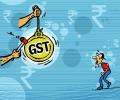
Over 100,000 small and medium-sized businesses are non-compliant with e-invoicing norms under the goods and services tax (GST) regime, a mandatory requirement for businesses with an annual turnover of over Rs 5 crore. E-invoicing provides real-time access to invoices that are prepared by the supplier on the purchase of goods, allowing faster accessibility to input tax credit, thereby limiting the manipulation of fake credit as it has to be generated before the transaction. "The default has been reported mainly in businesses with a turnover between Rs 5 crore and Rs 20 crore," a senior official informed

Singapore Airlines' deal with Tata Sons (Tata) will inject a further SGD 360 million ($267 million) into Air India. It will give SIA a 25.1 per cent stake in the enlarged Air India group following its takeover by Tata and merger with Vistara Airlines. The November 2022 deal between Singapore Airlines and Tata Sons to further inject $267 million into Air India is one of the key strategic initiatives for future growth mentioned in the quarterly financial report. This agreement is still subject to regulatory approval. SIA in the statement said, "The merged entity will be four to five times larger in scale compared to Vistara, with a strong presence in all key airline segments in India.

Govt is keen to push reforms in the insurance sector.

The government is not in a "crazy rush" to sell everything and it will continue to have a presence in four strategic sectors, including telecom, Finance Minister Nirmala Sitharaman said on Saturday. In strategic sectors, a bare minimum presence of the existing public sector commercial enterprises at the holding company level will be retained under government control. The remaining enterprises in a strategic sector will be considered for privatisation or merger with another PSE or for closure.

'The entire value of LIC is created by its shareholders because after the initial invest net of Rs 5 crores in 1956, the government has not given any additional capital to the LIC.' 'If the corporation has expanded and emerged as the biggest financial institution in the country, it is only because of the policyholders.'

As per the fifth round of the NFHS, there are 1,020 women for every 1,000 men.

The recent protests by employees of Urban Company and the case of a a Zomato delivery executive who died in a road accident point to the severely straitened condition of gig workers during the ongoing Covid-19 pandemic. Budget 2021 had promised several measures to help the cause of gig economy workers, but most of them are yet to see the light of day. Even after a year, the country's gig workers continue to be without any social security cover or a minimum wage guarantee. "In Budget 2021, finance minister Nirmala Sitharaman had announced that the government is looking toward including migrant and gig workers for social security benefits," says Srinivas Kotni, managing partner, Lexport, a consulting firm. Parliament had passed the Code on Wages in 2019 and Code on Industrial Relations, Social Security and Occupational Safety, Health and Working Conditions in 2020.

'A cutback in hiring and compensation growth by IT companies will have a significant impact on consumer demand, especially in the urban sector of the economy.'

After the massive sell-off since October, foreign portfolio investors (FPIs) are no longer the biggest non-promoter-shareholders in top Indian companies. This has happened for the first time in over a decade. "At 25.6 per cent ownership of India's largest 75 companies, domestic investors are now larger holders than FPIs for the first time since 2010," said Morgan Stanley strategists Ridham Desai, Sheela Rathi and Nayant Parekh in a note.

Addressing the 76th United Nations General Assembly session here, Prime Minister Modi said that today, every sixth person in the world is an Indian.

Customers of stressed Punjab & Maharashtra Co-Operative Bank (PMC Bank) will not get up to Rs 5 lakh insurance cover in the first lot as the multi-state co-operative bank is under the resolution process. Deposit Insurance and Credit Guarantee Corporation (DICGC) in the first lot will pay customers of 20 stressed banks except PMC Bank. For the first lot, the mandatory 90 days period concludes on November 30.

In the June quarter of FY24, 51 per cent of consumers who took small-ticket personal loans already had more than four credit products at the time of accessing yet another new loan, compared with just 17 per cent in the June quarter of FY20, points out Tamal Bandyopadhyay.

India's economic image is not affected due to Adani Group's recent decision to pull out Rs 20,000 crore FPO (follow-on public offers) amid allegations of financial wrongdoings, Finance Minister Nirmala Sitharaman said on Saturday.

Indian start-ups raised issues, such as blockages in international wire transfers, disruptions due to threshold limits on withdrawals, lack of communication from US agencies, and the need for preferential access to credit, in a meeting with the government over the fallout of Silicon Valley Bank's collapse. Rajeev Chandrasekhar, minister of state for electronics and information technology, held a virtual meeting with over 450 members from start-ups, venture capitalists, and investors who have been directly affected by the closure of SVB. He assured them that the IT ministry would put together a list of suggestions and give it to the finance minister on behalf of start-ups.

'If individual stocks start falling 25% to 30% or more, then I doubt how many of them will be able to withstand that (kind of selloff). That is when you'll see panic coming in.'

In the context of market integrity, the IRAI and RBI should go over the minutes of the LIC and SBI board meetings when the decisions to invest in Adani equity or debt were taken, notes Jaimini Bhagwati, former World Bank treasury professional.
